Lucas Lim
Monday, July 07, 2025
If you’re living in a HDB flat right now, you’ll be familiar with the concept of a 5-year MOP (Minimum Occupation Period). It’s simple and straightforward, you can’t sell even if you want to. But private property works differently. What they have instead is SSD (Seller’s Stamp Duty). It doesn’t stop you from selling early, you just have to pay to get out of the game.
Imagine you buy a private condo for $1 million.
Then for whatever reason, maybe prices go up, maybe you need cash and you decide to sell it after just 1 year.
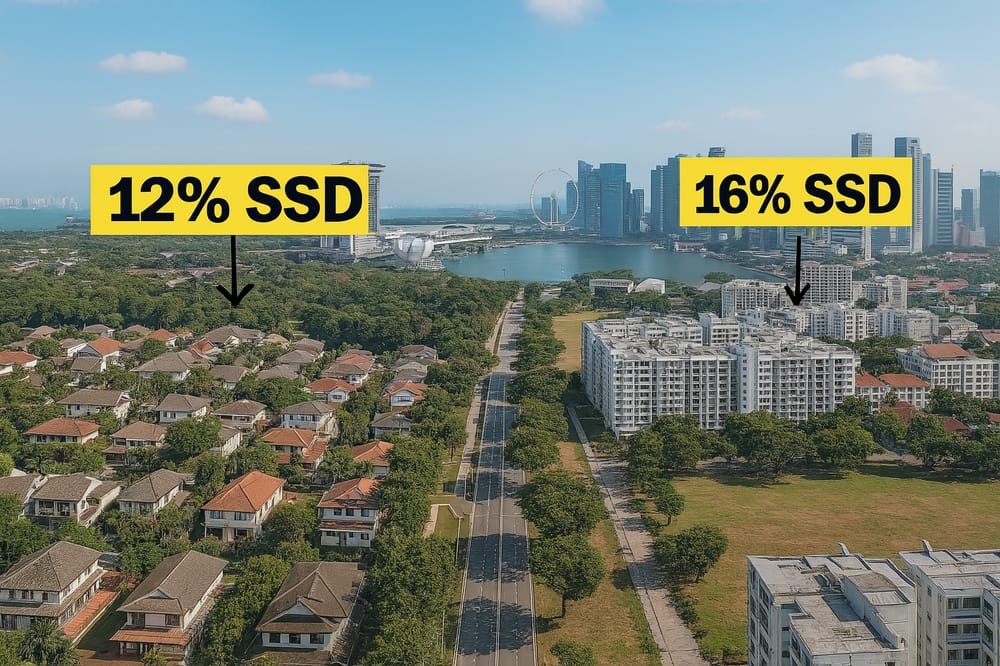
Under the new SSD rules, you would have to pay 16% of your selling price as tax. That’s $160,000, gone straight to IRAS. TAX.
If you wait for 2 years instead? It drops to 12%.
3 years? 8%.
Only after 4 full years, you can sell with zero SSD. The earlier you sell, the more you bleed. It’s the government’s way of saying: “If you’re just here to flip fast and make a quick buck, we want a slice of that cake too.
The changes applies to all residential properties bought on or after 4 July 2025. Not retroactive. So if you’ve already bought, you’re safe.
So why did the government make these changes?
Short answer: to slow the “flipping”.
Longer answer, because post-COVID, a lot of buyers started treating private property like a tradeable asset, not a home. Especially in the sub-sale space. These are units sold before they’re even completed. And here’s where it gets risky. When too many people are buying not to own, but to offload, sentiment becomes the market. And here’s the part no one likes to talk about:
If everyone’s buying to offload, who’s left to buy?
Too many sellers, not enough takers. Listings stack up. Viewings go quiet. Prices dip a little. Whispers start. “Market not doing well?” And without a brake in place, those whispers turn into fear. Fear turns into a scramble and the scramble becomes a panic.
That’s exactly what SSD is trying to prevent.
This isn’t a punishment. It’s a circuit breaker.
Think back to Silicon Valley Bank. One whiff of trouble, and people pulled deposits. Not because the assets were worthless but because no one wanted to be last. That’s how confidence collapses: not from logic, but from fear and the same thing can happen in housing if speculation runs wild.

Another classic example of speculation is the whole Diamond Hands saga with GameStop.
GameStop was a dying video game chain in the US, clunky website with fading relevance. Hedge funds were betting on it to go under.
Then retail investors, ordinary people, most of them on Reddit saw what was going on and decided to flip the board. They started buying. More than that, they started holding. Not because it made financial sense, but because it meant something. It was a middle finger to Wall Street and they didn’t just toss in spare change.
Some of them pawned jewellery.
Sold their cars.
A few even mortgaged their homes.
All of it just to pour into a stock that was hyped up by the internet.
They didn’t buy a company.
They bought a belief.
And for a moment, it worked. GameStop hit $400. People became millionaires on paper. Until the belief cracked and people started to feel their hands shaking, a few sold., then a few more and by then, the chain reaction could not longer be stopped. That’s when it broke. Not because the fundamentals changed. Not because of earnings. But because conviction got tired.
That kind of raw conviction shows up in property too.
When everyone starts buying because they believe prices will keep climbing.
Because "Singapore property always goes up" or "confirm can flip after TOP".
That’s sentiment disguised as logic. We saw it post-COVID. Sub-sales surged. New launches started moving not just because people wanted homes, but because everyone assumed they could offload later, higher. Buyers weren’t asking “can I live here?” they were asking “can I exit fast?” And here’s where it rhymes with GameStop:
As long as everyone holds, prices stay high. But the moment belief shakes, even slightly, listings flood, prices wobble, and buyers pull back. Nobody wants to be the last to sell. So everyone tries to sell first. That’s when the floor disappears.
This SSD policy is not a punishment. What this does is forces people to slow down, to sit with the asset they just bought. Four years minimum. It’s a subtle way of saying:
"If you're only here for the quick flip, you're not invited."
And maybe that’s what the market needs. Not more heat. Just fewer sparks.
Looking to buy a New Launch?
Jump on a free 1-1 consultation call with me where we explore your options with 100% clarity on what your next move should be.
Property purchases are one of the largest if not the largest puchase in your life, don't go about it as if you're shopping for a new iPhone. In the consultation, we'll go through all the options you have and leave you with a clearer picture of what your next steps should be, no strings attached.
If this is something you would like, tap the button below and book your free consult.
Talk soon ;)
Lucas Lim
PropNex Ltd
R067786G
Disclaimer: The information provided on this site is for educational and informational purposes only and should not be construed as financial or real estate advice. Always do your own research or consult with a qualified professional before making any investment decisions. Fine Print (That Nobody Reads, But We Put It Here Anyway): No, you can’t sue me if your property doesn’t magically double in value overnight. Yes, the market moves fast, but informed decisions always win in the long run. Read, learn, invest wisely.
© 2025 Lucaslim.com. All rights reserved. This content may not be reproduced, distributed, or used in any form without prior written permission.
Lucas Lim
PropNex Ltd
Agent Registration: R067786G
Contact: 9616 7160